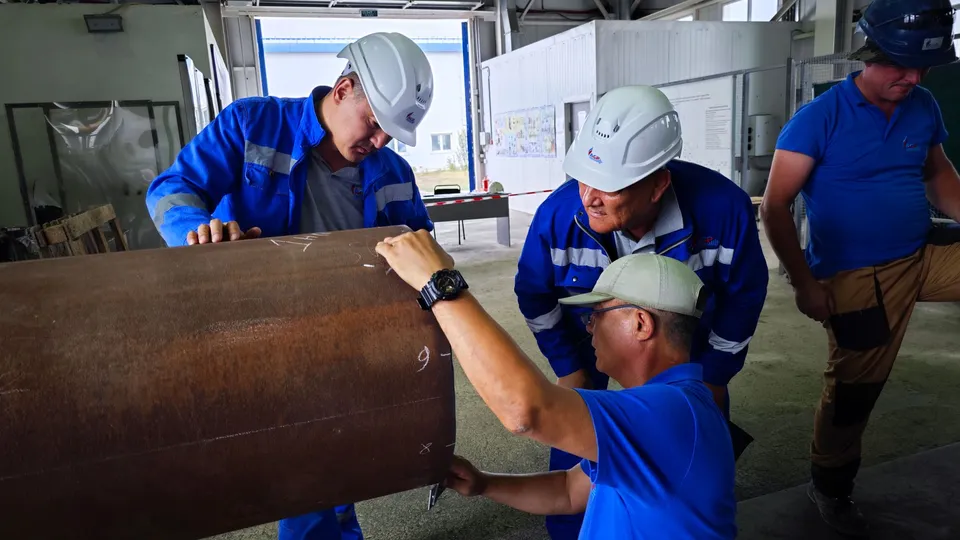
The hardest leap in a data center is often not from beginner to technician. It is the jump from a controlled build, where everyone knows the work package, to a live facility, where the wrong touch can create a safety event, a service interruption, or a documentation gap that haunts the next shift. That is why the employment question is not just “Can this person do the task?” It is “Does this person understand the boundary around the task?” The sector is large enough and mature enough to need that discipline: BLS reports 56,613 private establishments in the data-processing and hosting subsector in fourth quarter 2025, with average hourly earnings of $59.68 for all employees and average weekly hours of 38.2 in May 2026. That is a full-time operating workforce, not casual labor.
Readiness starts with what a worker may touch
A lot of onboarding in critical infrastructure fails because it focuses on tools before authority. The federal task profiles in the research report point in a different direction. O*NET activities repeatedly emphasize documenting work, recording repairs, training others, assigning duties or work schedules, maintaining contingency plans, and coordinating installation. In other words, data center work is not finished when the wrench comes away from the equipment. It is finished when the next person can trust the note, the log, the handoff, and the escalation path. That is true for facilities staff, controls support, and IT-facing teams alike. A worker who can describe a problem clearly and leave a clean record is safer and more useful than a worker who can move quickly but leaves confusion behind.
That is why the first lesson on a live site should be authorization, not speed. OSHA’s lockout/tagout standard requires employers to establish a program and procedures that prevent unexpected energization, start-up, or release of stored energy, and OSHA’s electrical materials treat arc flash as a real hazard that may require protective measures. For employers, that means a new hire must learn what can be touched, what cannot, who has the authority to isolate equipment, and what proof is needed before the work moves forward. For applicants, it means a good data center job is not simply a chance to “figure it out as you go.” It is a controlled environment where judgment, compliance, and documentation are part of the skill set.
Build-phase habits do not automatically carry into operations
The distinction between construction and operations matters because the work changes hands. The report’s construction-side example from Holder Construction shows daily and weekly safety toolbox talks, third-party crane inspection, critical-lift planning, and injury/illness tracking. That is a project environment with active supervision and a temporary work package structure. It is not the same thing as the steady-state operating culture inside a live facility. A person who spent months on a fit-out crew may understand installation and sequencing very well, but the moment the asset turns over, the worker needs a different mental model: preserve uptime, protect live systems, and record every change so operations can own it after the crew leaves.
That is one reason employers should avoid using a single “technician” bucket for every phase of the job. The site may have construction electricians, commissioning support, controls specialists, maintenance technicians, and vendor crews, but those roles are not interchangeable. The sources in the report show that the build phase leans on project safety, inspection, and task sequencing, while the operating phase leans on lockout/tagout, recordkeeping, and repeatable maintenance procedures. A strong onboarding plan should name the phase as clearly as it names the title. “Facilities technician” on a live floor and “commissioning technician” during turnover may sound similar, but the responsibilities are not the same.
Apprenticeship is the clearest model for live-site readiness
The best workforce model in the source set is registered apprenticeship because it makes the hidden parts of the job explicit. Apprenticeship.gov describes registered apprenticeship as paid work experience with a mentor, progressive wage increases, and classroom instruction. It also requires a specific occupation, a training plan, and a training provider. That structure matters because it matches the reality of data center work: some of the job is hand skill, some is rule-based judgment, and some is learned by seeing how an experienced worker documents, escalates, and verifies the condition of the site. Employers do not need to copy apprenticeship rules perfectly to benefit from the model. They can borrow the logic: shadowing first, supervised task lists second, sign-off third, independence last.
That model also helps applicants understand why a data center employer may care as much about habits as about credentials. A certificate can show that someone studied industrial safety, power distribution, PLCs, cooling, or network basics. But a certificate does not automatically grant site authorization. The employer still has to decide whether the person can work within the facility’s boundaries, follow the change-control process, and document the handoff in a way the next shift can use. That is why applicants should be ready to discuss not only what they know, but how they write work down, how they ask for help, and how they react when a task has to stop and be escalated.
Facilities and IT live in the same building, not the same job
One of the most important workforce mistakes in data center hiring is assuming the IT side and the facilities side can be screened the same way. They cannot. O*NET’s Computer Network Architects design and implement LANs, WANs, and other data communications networks, while Information Security Analysts monitor defenses and respond to breaches. Those are logical-system roles. They are not the same as HVAC mechanics, industrial machinery mechanics, or electrical power-line installers, which the report also identifies as distinct occupation families with their own task sets. A candidate with strong cabling or server-room support experience may be a promising fit for physical infrastructure support, but that does not automatically make the person ready to touch energized equipment, tune controls, or assume cybersecurity responsibility.
The reverse is also true. A veteran facilities technician may understand chillers, airflow, pumps, motors, and maintenance records, but that background does not automatically make the person a network architect or security analyst. Employers get better results when they stop calling every opening a generic technical role and instead name the lane: plant, controls, network, or security. That clarity helps recruiting, onboarding, pay progression, and supervision. It also helps the worker know what “good” looks like on day one, week four, and the end of probation. The report’s evidence supports that separation instead of collapsing it into one broad technical label.
A practical first-month checklist
A strong first month in a data center should answer four questions:
- What can this worker touch without direct supervision?
- What must be documented before the task is considered complete?
- Who can authorize a stop, an energization, or a handoff?
- When does the worker escalate instead of improvise?
Those questions are not bureaucracy for its own sake. They are the practical expression of the documented patterns in the source set: documentation, mentoring, hazards, and handoff discipline. If a site can answer those questions clearly, the new hire ramps faster and the operation becomes safer. If it cannot, the site is asking for trouble while pretending it is asking for speed.
The modest next step is simple: employers can compare their role description to the actual first-month tasks, and applicants can ask what they are expected to touch, document, and escalate before they accept the offer. If you want a starting point, review the employers page or the job seekers page.